
What is a Cash Register and How Does It Work
Share This Story, Choose Your Platform!
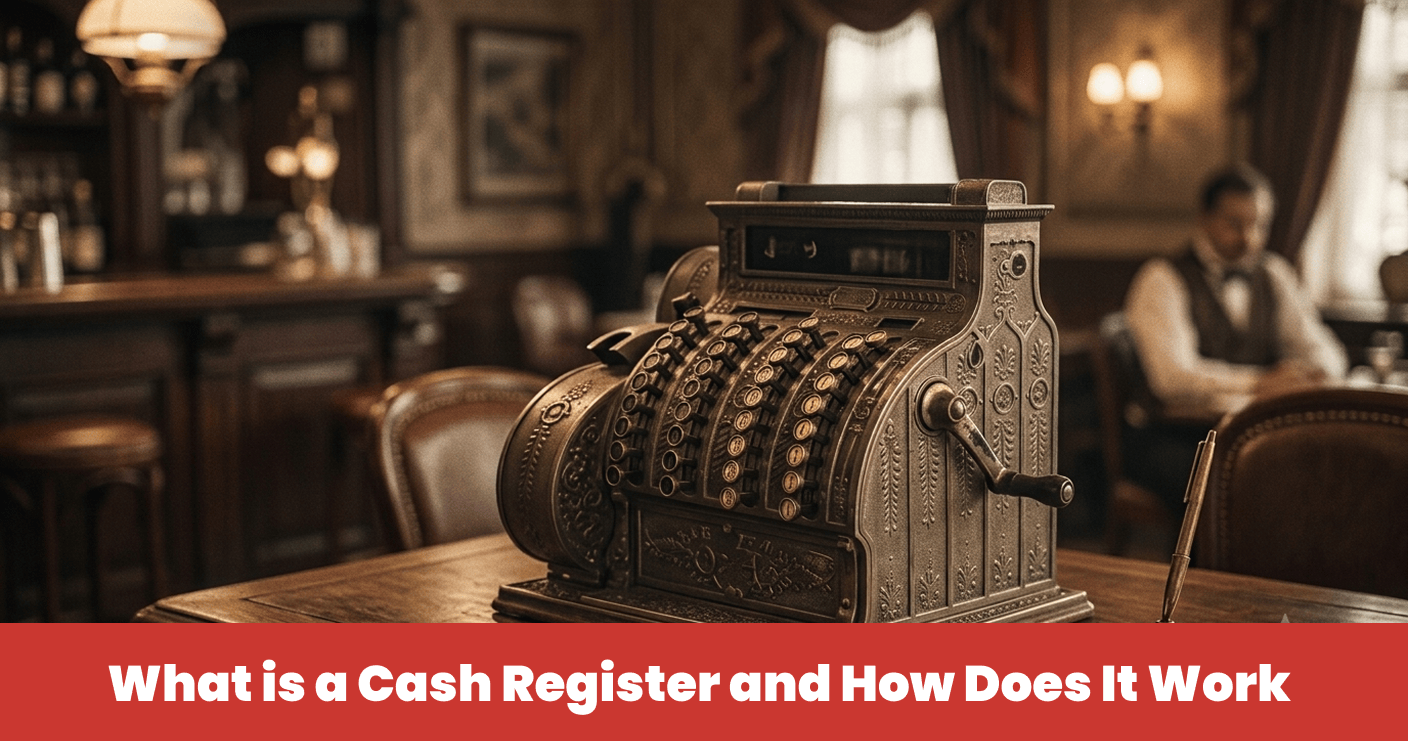
Table of Content
Quick Answer – A cash register is a device used by businesses to record sales, calculate transaction totals, accept payments, and store cash. When a customer makes a purchase, the cashier enters or scans the items, the register calculates the total including applicable taxes, records the transaction, and accepts payment by cash or other supported methods. Modern electronic cash registers may also provide features such as receipt printing, sales tracking, and basic reporting..
A cash register is a widely used tool in retail and hospitality businesses. It helps businesses process sales and store money safely. From large restaurants to small shops, the cash register tracks daily transactions. The basic concept is to handle payments in businesses.
The global electronic cash register market size was estimated at USD 7.01 billion in 2024 and is projected to reach USD 20.48 billion by 2033, growing at a CAGR of 12.5% from 2025 to 2033.
In this guide, you will explore what a cash register is, how it works, its main components, and more.
What is a Cash Register?
A cash register is an electronic device that helps businesses record sales transactions and safely save cash in the drawer. Its main function includes:
- Tracking the sale amount.
- Recording the totals.
- Storing money in the drawer is locked.
- Printing and displaying transaction details.
Cafes, restaurants, supermarkets, and retail stores mostly use cash registers. They are designed to prevent theft, and handling money has evolved with digital displays and printers.
How Does the Cash Register Work?
A cash register follows a simple process for every transaction:
Item Entry
The cashier adds the item price manually or selects it using preset keys or buttons.
Calculation
The cash register calculates these details automatically:
- Subtotals
- Taxes
- Discount if supported
- Final amount
Payment Processing
Customer payments will be made by card, cash, or other payment methods. The cashier will add the amount received.
Change Calculation
If the payment is made in cash, then the cash register automatically calculates the exact change to return.
Cash Drawer
Once the transaction is completed, the cash drawer opens up automatically, allowing the cashier to store cash inside and give change.
Receipt Generation
Many electronic cash registers print receipts, which include:
- Store name
- Purchased items
- Prices and taxes
- Total amount
- Payment method
- Date and time
Transaction Recording
All sales are stored in register memory, enabling EOD summaries – total sales & collected cash.
Important Components of a Cash Register
A cash register is a combination of various essential components that help to process sales effectively.
Display Screen
The display screen shows item prices, subtotals, total amount, and change due. Cash registers include dual displays, one for the cashier and another for customers.
Keyboard or Buttons
The keyboard and buttons are used to enter item prices, discounts, and quantities in the retail and restaurant landscape. These buttons are designed to reduce entry mistakes and speed up quick checkout.
Receipt Printer
A receipt printer provides transaction slips that include purchase data. These records are used for customer verification, accounting, refunds, and daily sales.
Cash Drawer
The cash drawer helps you store currency, including notes and coins. It opens up automatically during sales, allowing safer cash management while maintaining security during checkout.
Processor
The processor is a central component of the cash register. It processes sales data, calculates totals, and coordinates with all components smoothly.
Types of Cash Registers
Various types of cash registers are designed for businesses of different sizes and operational requirements. It is a solution depends on reporting requirements, payment methods, and transaction volume.
Mechanical Cash Registers
It is a cash register that operates with manual springs and gears. This device doesn’t use electricity or any other digital components. These devices offer no storage or reporting features. Due to slow operations, these cash registers are used very little.
Electronic Cash Registers
These cash registers have digital displays and calculators that help automate pricing and calculations. Faster, more accurate, and easier-to-use cash registers make them suitable for cafes, retail stores, and kiosks. 88% of retail payments in the UK were made using cards or other electronic payment methods in 2023, increasing the need for electronic cash registers.
Touchscreen Cash Registers
These cash registers have a touch-based interface, are easy to operate, and look visually attractive. They have limited functionality when compared with POS systems. Small retailers and restaurants use cash registers.
Hybrid Cash Registers
These type of cash registers combines traditional cash registers with POS features. They support sales reporting, inventory tracking, and card payments, which makes registers a good option for businesses that need more functionality. They have limitations when compared with POS.
Advantages and Disadvantages of a Cash Register
Advantages
Operate Quickly
The cash register is designed to process sales and payments, which allows you to enter products quickly and ensure fast checkouts. It reduces wait times during peak hours.
Flexible Staff Training
A cash register with an easy-to-use UI and limited functionality allows staff to learn cash register operations in a short time period.
Less Investment
It involves a one-time hardware purchase with little or no subscription fees, making it a cost-effective option for all businesses.
Reliable Registers
It can operate without internet connectivity, resulting in uninterrupted sales during network issues.
Security
A cash register handles cash and coins, and lockable cash drawers reduce the risk of theft and cash mismanagement.
Disadvantages
Sales Data Limit
A cash register provides basic sales reports, which include daily sales data and transaction summaries.
Manual Inventories
Cash registers don’t include inventory management, so businesses need to manually enter data, which increases the risk of inventory errors, stock mismatches, and overstocking.
Less Growth
Cash registers are designed for small retail stores or shops; they offer limited support to manage multiple outlets and operations.
Limited Integration
The cash registers offer limited integration with accounting software, payment platforms, and other tools.
Limited Real-Time Insights
A cash register doesn’t provide real-time analytics or reporting insights. It is a simple tool that provides limited insights into your business performance.
Why Do You Need Cash Registers?
A cash register provides a reliable and cost-effective way to manage daily sales and transactions. It is best suited for simple operations and low transaction volumes. It works well where transactions have less operational complexity.
Retail Stores
It is ideal for selling limited products, where cash registers handle basic billing and cash management, without requiring large inventories. According to a 2026 research, 77% of UK small and medium-sized retailers still accept cash, while 46% of all in-store transactions are paid in cash.
Grocery Shops
It is ideal for fast checkouts and cash transactions for grocery stores where speed and simplicity matter.
Small Cafes
It is ideal for cafes that have short menus and simple ordering processes. Staff can learn quickly, reducing training time.
Low Transaction Complexity
When a business doesn’t need sales reports, inventory details, or customer data, it can still benefit from cash registers.